
Rethinking song creation Through AI Driven Composition Systems
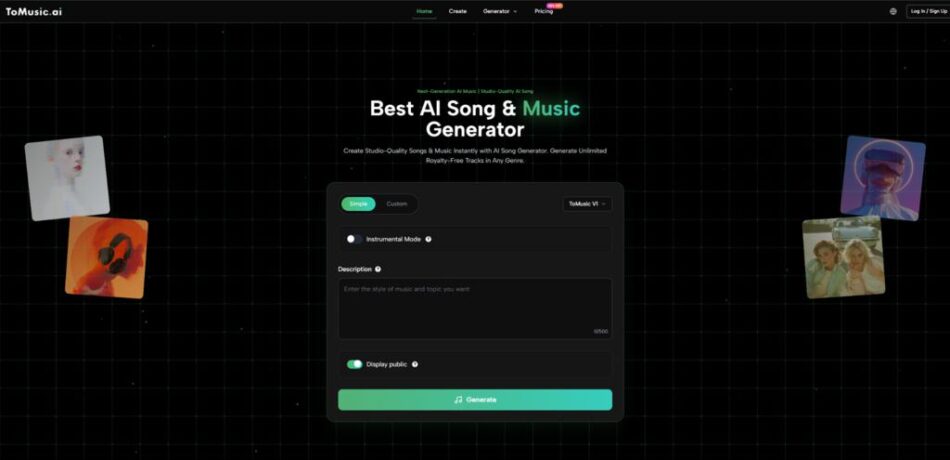
There is a common assumption that music creation is inherently technical. That assumption has shaped everything from education to production workflows. But after spending time experimenting with tools like AI Music Generator, it becomes clear that the technical barrier may not be essential—it may simply be historical.
What we are seeing now is not just automation, but a redefinition of how music can originate. Instead of beginning with instruments or software, the process can begin with language itself.
Why Traditional Music Workflows Favor Specialists
Layered Complexity Slows Down Creation
Traditional production typically involves:
- Composing melodies
- Designing arrangements
- Recording performances
- Mixing and mastering
Each stage requires a different skill set. This creates specialization, but also fragmentation.
Creative Flow Is Often Interrupted
Because of these layers:
- Ideas must be paused and translated
- Momentum is frequently lost
- Execution becomes a bottleneck
The result is that many concepts never move beyond rough drafts.
How AI Systems Collapse The Workflow Stack
Unified Generation Instead Of Sequential Steps
Rather than separating tasks, the system combines:
- Composition
- Arrangement
- Performance
into a single generation step.
This does not eliminate complexity—it hides it behind abstraction.
Language As The Primary Interface
The most important shift is that:
- Inputs are descriptive, not technical
- Outputs are structured, not raw
This allows users to think in terms of meaning rather than mechanics.
Understanding The Internal Logic Of Generation
Mapping Intent To Musical Structure
Based on repeated tests, the system appears to interpret:
- Mood descriptors → harmonic frameworks
- Genre labels → instrumentation patterns
- Sentence rhythm → melodic phrasin
This mapping is not perfect, but it is consistent enough to be predictable.
Dynamic Arrangement Behavior
Tracks generated often show:
- Gradual build-ups
- Distinct section transitions
- Controlled intensity changes
This suggests that the system models temporal structure, not just sound textures.
Using The System Step By Step
Step 1: Input Concept Or Lyrics
You can start with:
- A short prompt
- Or a full lyrical composition
The system treats both as structured input.
Step 2: Define Style And Mood
Parameters typically include:
- Genre selection
- Emotional tone
- Vocal inclusion
These guide the generation process.
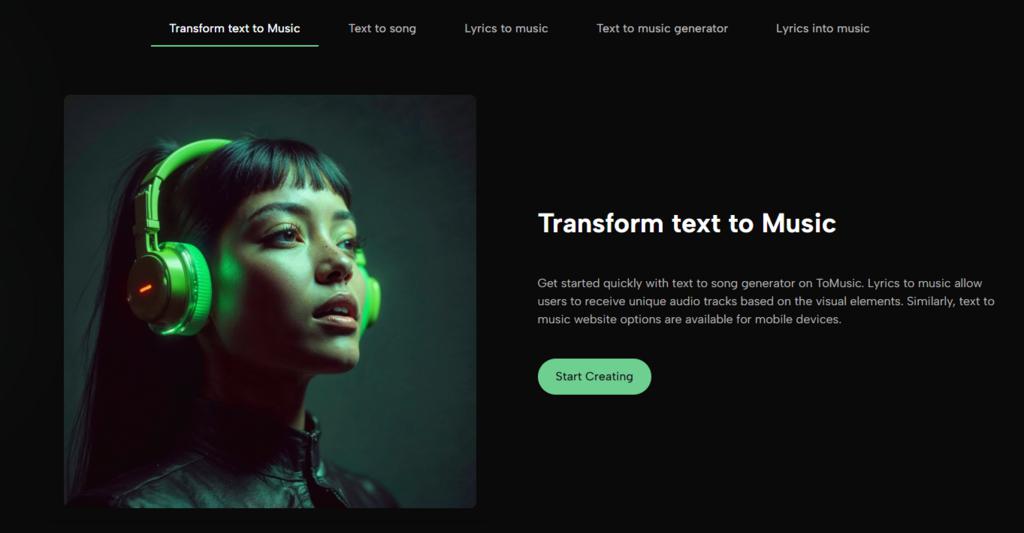
Step 3: Generate And Iterate
The system outputs a full track. In most cases:
- Multiple generations are needed
- Small prompt adjustments lead to noticeable changes
Comparing Creative Approaches Side By Side
Dimension | Conventional Production | AI Generation |
Starting Point | Instruments or DAW | Text or lyrics |
Skill Requirement | High | Moderate |
Time Investment | Significant | Minimal |
Iteration Cost | High | Low |
Output Consistency | Controlled | Variable |
This comparison highlights a trade-off: control versus accessibility.
Where Lyrics to Music AI Introduces A New Layer
When switching to Lyrics to Music AI, the experience changes from abstract generation to narrative-driven creation.
Instead of describing a feeling, you define a story. The system then:
- Aligns melody with lyrical phrasing
- Adjusts intensity based on textual emphasis
- Creates structural repetition where appropriate
In my observation, this often produces results that feel more intentional, even if they still require refinement.
Practical Scenarios Where This Approach Works Best
Fast Turnaround Media Production
For creators working under time constraints:
- Music can be generated on demand
- Styles can be adapted quickly
This reduces dependency on external resources.
Idea Exploration Without Commitment
For musicians:
- Concepts can be tested instantly
- Different directions can be explored without re-recording
This changes the role of production from execution to exploration.
Educational And Experimental Use
For beginners:
- The system provides immediate feedback
- Musical concepts can be understood through results
This lowers the entry barrier to learning.
Observed Limitations And Trade-Offs
Control Is Abstract, Not Precise
While parameters exist:
- Fine-grained adjustments are limited
- Results depend on interpretation rather than exact control
Output Quality Varies
Even with the same input:
- Some outputs feel cohesive
- Others require regeneration
Consistency is improving but not guaranteed.
Creative Identity Can Blur
Because generation is model-driven:
- Outputs may share stylistic similarities
- Distinctiveness depends on input creativity
Why This Signals A Broader Shift In Creation
The significance of systems like this is not just efficiency. It is the redefinition of creative entry points.
When music can be generated from language:
- The boundary between idea and execution becomes thinner
- The role of technical skill becomes less central
This does not diminish traditional production. Instead, it expands the ways in which music can be created.
What To Pay Attention To Moving Forward
From what I’ve seen, the most interesting developments will likely focus on:
- Better alignment between lyrics and vocal expression
- More consistent structural coherence
- Greater control over arrangement details
These improvements would not replace the current system—they would refine it into something more predictable and expressive.
A Different Way To Think About Making Music
Perhaps the most important takeaway is this:
Music creation no longer needs to begin with sound.
It can begin with language, intention, and narrative—and then be translated into sound through systems that understand both.
That shift does not simplify creativity. It changes where creativity happens.
Relacionado